Monday, August 27, 2018

The Weakness of Strength

Leprous King Uzziah

Hence his fame spread afar, for he was marvelously helped until he was strong. But when he became strong, his heart was so proud that he acted corruptly, and he was unfaithful to the Lord his God, for he entered the temple of the Lord to burn incense on the altar of incense.(2 Chronicles 26:15b-16a NASB)

Uzziah was a righteous King.  It is said in v. 4, “He did right in the sight of the Lord, yet when he became strong he turned out to be weak.  His life reveals to us the weakness of strength.

In many places in the Bible, we are told to be strong in the Lord.  Unfortunately, Uzziah’s strength had come to be in himself and not God.  What precipitated this change? We are explicitly told that when he became strong, his heart was proud.  Pride is the fatal flaw of all human nature. Disobedience is always the sign that self-will is starting to take control of your life. Uzziah entered the temple of the Lord to burn incense, a task reserved for the priest.  Becoming strong through our own success can have an intoxicating effect on us.  We can start to dwell on what we have done and not what God has done for us.  At some point, the balance of power shifts and we begin to think that we know better than God, and we act accordingly.  Today, pastors of great churches are doing things expressly forbidden by the Bible. Pride deceives the great and the small.

Pride can never be rehabilitated, it has to be eradicated.  When the signs of arrogance arise, we must be brutally honest with God and man.  Pride conceals what humility reveals, the weakness of strength.

Image used with permission by Microsoft.

Ken Barnes the author of “The Chicken Farm and Other Sacred Places”  YWAM Publishing
Email:  
kenbarnes737@gmail.com
website: 
https://sites.google.com/site/kenbarnesbooksite/
            http://gleanings757.blogspot.com

Thursday, August 23, 2018

Removing the Rock

Jesus *said, “Remove the stone.” Martha, the sister of the deceased, *said to Him, “Lord, by this time [a]there will be a stench, for he has been dead four days.”
 (John 11:39 NASB)

Most people know the story of Jesus raising Lazarus from the dead.  What would have happened if Martha and the others present at the tomb had refused to roll the stone away?

A miracle happens when God temporarily suspends or reverses the processes of nature.  Something occurs that would not take place under normal circumstances. Martha’s concern was based on her knowledge of biological processes.  A dead body after a short period of time starts to decay and the gas released will produce an unpleasant odor.  In this story, there is a conflict between the natural mind and Jesus’ command. Generally, miracles are a combination of the natural and the supernatural.  God speaks, and we respond.  We do the possible and God, and God does the impossible.

Jesus responded to Martha’s hesitation in v. 40, Jesus said to her, “Did I not say to you that if you believe, you will see the glory of God?”  There was a battle going on here between the natural mind and Jesus’ command.  Fear always is the foe of faith.  Would they remove that stone and be overcome by the smell? My point here is not whether you can raise someone from the dead, but the principle behind the miracle.  Most miracles are proceeded by faith in what God has said, as evidenced by an act of obedience.

What rock is God asking you to remove?  Like the anticipated odor from the decaying body of Lazarus, what potential negative consequences are you envisioning from your act of obedience.  Is God really speaking? If he is, remove the rock.

Imaged used with permission by Microsoft.

Ken Barnes the author of “The Chicken Farm and Other Sacred Places”  YWAM Publishing
Email:  
kenbarnes737@gmail.com
website: 
https://sites.google.com/site/kenbarnesbooksite/
            http://gleanings757.blogspot.com

Friday, August 17, 2018

Be Strong to the End


He said to me, ‘Your son Solomon is the one who is to build my house and my courts, for I have chosen him to be my son, and I will be his father.  I will establish his kingdom forever if he perseveres in keeping my commands and my ordinances as he is doing today.’(1 Chronicles 28:7 CSB)

King Solomon's Foreign Wives
The occasion is King David commissioning his son Solomon to be the King and build the Temple. It is clear that God had chosen Solomon to be the King and called him to build the Temple, but there is generally a conditional aspect to all God’s promises. It is possible to be strong in the beginning but weak in the end.

At the time of his commissioning, Solomon was strong, wise, and good.  He sought wisdom over personal gain, and God gave him both. He was a shining light, yet his story teaches us that it is not just how you start, but how you finish that counts.  In 1 Kings 11:1-9, the Bible reveals to us how Solomon later married foreign women, and they turned his heart away from God.  It has been said that there are two tragedies in life, getting what you want, and not getting what you want.  One can experience success in life and then become complacent and to fill a void, pursue inappropriate things.  Is this an explanation of David’s sin with Bathsheba?  In 2 Samuel 11:1, it is recorded that in spring of the year when kings go to war, David stayed home. Others never quite fulfill their vision and become regretful and cynical.  Both may have let their work or ministry become an end in itself, rather than a means to an end, knowing and loving God.

If a man like Solomon was susceptible to this temptation, should we not be wary of this conclusion? What is the solution? It’s simple obedience. Solomon’s problem was disobedience, 1 Kings 6, “Solomon did what was evil in the Lord’s sight, and unlike his father David, he did not remain loyal to the Lord.” No matter how wise or knowledgeable you are, without sustained obedience, you will not succeed. Keep doing at the finish what you did in the beginning.  Stay strong, my friends, to the end.

Imaged used with permission by Microsoft.

Ken Barnes the author of “The Chicken Farm and Other Sacred Places”  YWAM Publishing
Email:  
kenbarnes737@gmail.com
website: 
https://sites.google.com/site/kenbarnesbooksite/
            http://gleanings757.blogspot.com

Friday, August 10, 2018

Doing Right Things Wrong Ways

Then the Lord’s anger was aroused against Uzzah, and he struck him dead because he had laid his hand on the Ark. So Uzzah died there in the presence of God.
 (1 Chronicles 13:10 NLT)


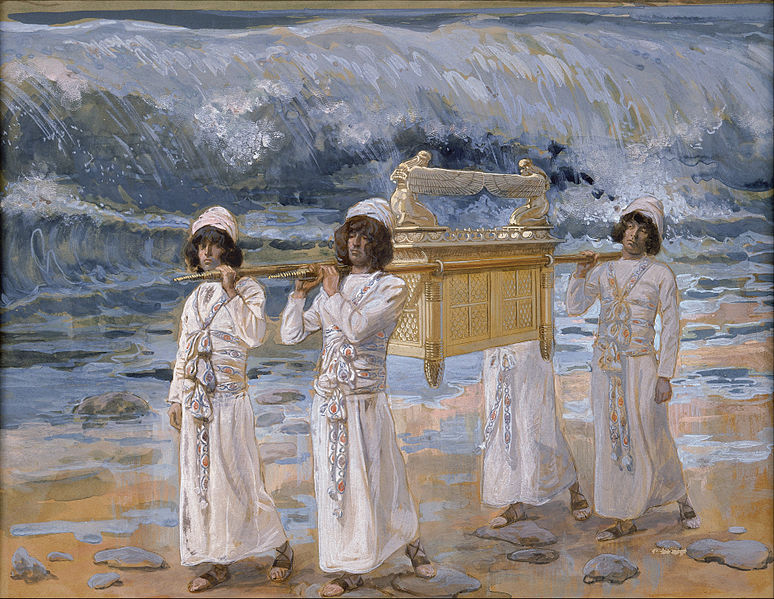
David and all Israel had sought to bring the Ark of God back to Jerusalem, a good thing.  To transport the Ark, they placed it on a cart, a bad thing.  It never works to try to accomplish good purposes by using improper means.

Israel had been given detailed instructions on how to carry the Ark of the Covenant.  It was to be carried by the Levites on long poles.  Afterward, David realized the error of his ways.  “Because you Levites did not carry the Ark the first time, the anger of the Lord our God burst out against us. We failed to ask God how to move it properly.”
(1 Chronicles 15:13 NLT).  In our efforts for God, details do matter.  It is true that Uzzah showed disrespect by reaching out to the Ark to steady it, but when leaders, such as David, do not fully obey God, they always put their people in precarious situations.  Disobedience always programs us for failure. After Uzzah died, David got angry with God and refused to take the Ark to Jerusalem, where he should have been upset with himself.

We see in the Scriptures where the Philistines transported the Ark on a cart (1 Samuel 6).  Are you trying to do the work of the Lord by the ways of the world?  It never works. David tells us his fundamental error, he failed to ask God how to do it. When we think we know how to do it, generally, we don’t.  Good intentions never justify wrong actions.

Image used with permission by Google.

Ken Barnes the author of “The Chicken Farm and Other Sacred Places”  YWAM Publishing
Email:  
kenbarnes737@gmail.com
website: 
https://sites.google.com/site/kenbarnesbooksite/
            http://gleanings757.blogspot.com

Saturday, August 4, 2018

Self-centered Religion


“Say to all your people and your priests, ‘During these seventy years of exile, when you fasted and mourned in the summer and in early autumn, was it really for me that you were fasting? (Zechariah 7:5 NLT)

At times our prayers and religious observances can be an offense to God.  We can say and do all the right things in the performance of our faith, but in our hearts, we are seeking to please ourselves and not God.

A delegation of Jewish people was sent to the Temple to seek the Lord’s favor.  They asked if they should continue a long-established fast.  God answered them in a very Jewish fashion.  He responded to a question with a question. “Was it really for me that you were fasting?  We often ask God one question, and he answers another.  That is because God knows what we need, not what we think we need.  God gets to the point in v.8.  “Judge fairly and honestly, and show mercy and kindness to one another.  Do not oppress widows, orphans, foreigners, and poor people.  Do not make evil plans to harm each other.”   All these directives are about others and not ourselves.  God is not just concerned about what happens in our worship service on Sunday, but how it changes us to prefer others the rest of the week.  Legalism always leads us to appear one way in church, but act another way out in the world.

The Prophet Micah has told us what God requires of us. It is not about sacrifice, but doing justly and loving mercy (Micah 6:8).  The focus here is not about how we sacrifice, but why. Is it for ourselves or God? The former only produces a self-centered religion.

Image used with permission by Microsoft.

Ken Barnes the author of “The Chicken Farm and Other Sacred Places”  YWAM Publishing
Email: 
kenbarnes737@gmail.com
website:
https://sites.google.com/site/kenbarnesbooksite/
            http://gleanings757.blogspot.com


Wednesday, July 25, 2018

Standing at Attention

Ezra stood on the platform in full view of all the people. When they saw him open the book, they all rose to their feet.  Nehemiah 8:5 NLT)

When the people stood up, it showed respect for what was being read and who was reading it, in that order.  Taking the Word of God seriously is the first step towards reformation and transformation.

It is recorded that as Ezra read from the book the people wept (v. 9b) and confessed their sins (Chapter 9:3).  The Book of the Law of the Lord was read aloud for three hours, and then they confessed their sins and worshiped for another three hours. They explained the law and tears were turned to joy. There is always great rejoicing when we not only hear God’s Word but understand it.  Revelation is a critical component of transformation.

Ezra is the crucial figure in all that is happening among the Israelites.  You cannot lead people past the spiritual level to which you have obtained.  In Ezra 7:10 it is recorded, “For Ezra had set his heart to study the law of the Lord and to practice it, and to teach His statutes and ordinances in Israel.”  He studied, practiced, and then he taught.  It was not about just intellectually obtaining information, but applying it to his life.  It was not only education but transformation.  There is an old Puritan saying that goes, “You can never lead anyone heavenward unless you are rising yourself. You don’t need to be high, but you do need to be rising.”

When your Pastor arises to the pulpit to bring you the Word of God, in your heart are you standing at attention or thinking about lunch?  The latter will lead to indigestion, the former to transformation.

 Image used with permission by Microsoft.

Ken Barnes the author of “The Chicken Farm and Other Sacred Places”  YWAM Publishing
Email:  
kenbarnes737@gmail.com
website: 
https://sites.google.com/site/kenbarnesbooksite/
            http://gleanings757.blogspot.com


Wednesday, July 11, 2018

False Hope

Lovingkindness and Truth
Your prophets have said so many foolish things, false to the core.
They did not save you from exile by pointing out your sins.
Instead, they painted false pictures filling you with false hope.
 Lamentations 2:14 NLT)

People sometimes try to help us and end up hurting us. Hope to be genuine is based on truth. False hope always disappoints us and destroys our faith.

Israel had rejected the word of the Lord from many prophets and had found themselves in exile.  When God is trying to give us a message, there always seems to be an alternative one.  We love to hear things that tickle our ears.  If we are not willing to listen to the good and bad about ourselves, we will never foster godly character.  It is not difficult to develop a following by just telling people what they want to hear. God is not a cosmic Santa Claus. Sometimes he says yes, at other times no, and often he says to wait.  

Are you only being told what you want to hear? Do I like to hear good things about myself?  Of course, I do, but it is not about what I want, but what I need.  I require encouragement and correction.  I only grow spiritually when I hear the good and the bad about myself.  Raising a child where you give only praise without correction, or vice versa will probably create a disobedient teen.  People creating word pictures in our minds that are not based on truth will only lead to false hope.  It will create short-term gain but long-term pain.

Jesus always ministered in that delicate balance between lovingkindness and truth, affirmation and correction.  Are you being told what you need or want to hear? The latter message only disappoints and defeats our faith.

Image used with permission by Microsoft.

Ken Barnes the author of “The Chicken Farm and Other Sacred Places”  YWAM Publishing
Email:  
kenbarnes737@gmail.com
website: 
https://sites.google.com/site/kenbarnesbooksite/
            http://gleanings757.blogspot.com